
Although returning deposit bottles and cans earns money, unfortunately, cans and bottles still end up on the street or in bushes. In some places and after some events, there is so much litter that it's a dismal mess, and it also means a lost opportunity for recycling. But what we consider much less is: what can such a discarded can or bottle actually do to animals? Because for a hedgehog, bird, or fox, our carelessly discarded waste can be truly life-threatening. We discussed this with ecologist Niels de Zwarte from the Natural History Museum in Rotterdam.
Dead animals with a (sad) story
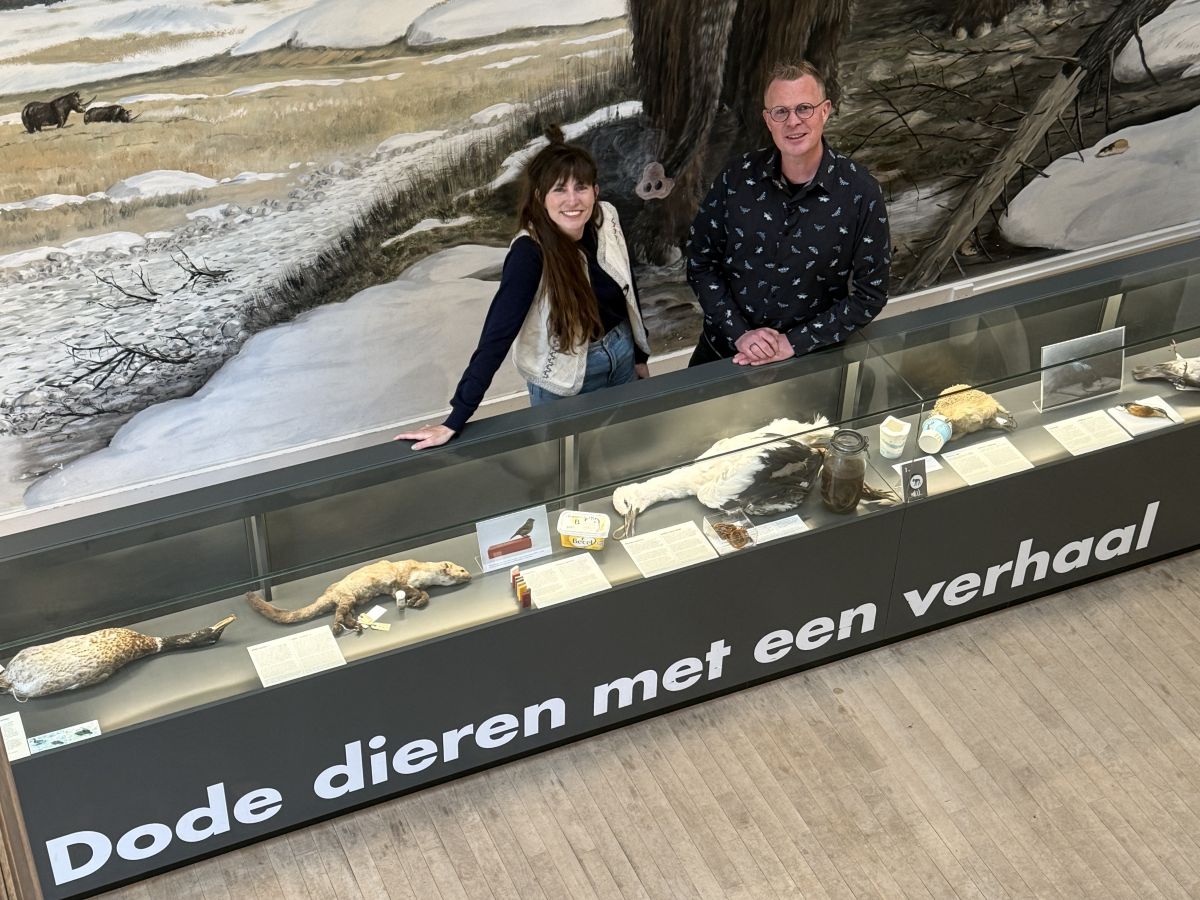
At The Natural History you might find one of the strangest museum collections in the Netherlands: Toll Animals with a Story. These are stuffed animals that met their end in a bizarre or tragic way due to human actions. Very impressive to see!
So there's a stork that died with a huge ball of rubber bands in its stomach, probably because it thought they were worms. There's a ‘Dominomus’, a sparrow that during Domino Day It entered a huge hall and was eventually shot dead because it threatened to throw stones. And perhaps you also know the famous ‘McFlurry hedgehog’. That poor hedgehog crawled into a discarded McFlurry cup to lick up leftover ice cream, but couldn't get its head out. It wasn't the only one. Many hedgehogs got their heads stuck in the ice cream cups with their spines and starved to death or became so disoriented that they fell into the water. Eventually, a considerable lobby in the UK ensured that the packaging was adapted. The well-known ‘face mask seagull’ is also in the museum. During corona, birds became massively entangled in discarded face masks, sometimes with fatal consequences.
Best confrontational, actually, because it painfully shows how quickly our waste becomes part of nature. And although there isn't (yet) an official ‘deposit animal’ in the collection, ecologist Niels de Zwarte sees on a daily basis how dangerous cans and bottles can be for animals.


Links: the rubber bands stork. The stork died because it thought the rubber bands were worms. See also: Why hair ties are a major litter problem. Right: the famous McFlurry hedgehog.
A deposit can quickly becomes a knife
According to Niels, animals are constantly searching for food. Sugary substances, fats, and proteins are incredibly attractive to them. Therefore, a can that still has a bit of energy drink, beer, or fizzy drink left in it is extremely appealing to an animal. However, this is where the danger lies: broken cans are razor-sharp! And it gets even worse when cans end up in roadside verges and are then hit by mowers. They literally turn into sharp metal blades. Birds, hedgehogs, foxes, and other small animals can cut themselves on them.
Even small parts of deposit packaging cause problems. Think of caps or that thin plastic ring from a bottle cap. Hungry animals mistake them for food and swallow them. That plastic then remains in their stomachs, which can cause blockages or a feeling of fullness while they are actually starving.
Plastic never truly disappears from nature
As if sharp shards of glass weren't bad enough, according to the museum, there's another problem that's far less visible: microplastics. Plastic bottles slowly break down into ever smaller pieces that eventually end up everywhere. In the soil, in the water, and therefore also in animals.
For example, the museum displays a recreated swan's nest that was made almost entirely of human waste. Plastic bags, packaging, returnable bottles, string, aluminium deposit cans, you name it. The actual nest was found in the wild and serves as a stark reminder of how commonplace our waste has become for animals. It's quite shocking, really, because plastics don't just disappear. Researchers are increasingly concerned about the long-term effects of all these tiny plastic particles, both on animals and on humans. There are indications that microplastics can disrupt hormones and be harmful to organs, although research into this is still ongoing.
Returning deposit bottles suddenly feels very different
After visiting this exhibition, you'll probably never look at a can by the roadside the same way again. Of course, one discarded bottle might seem harmless, but for an animal, it can literally be the difference between life and death. So yes, returning bottles for a deposit will also earn you a few pennies, but more importantly: you'll prevent a lot of misery. And honestly: once you've seen that McFlurry hedgehog, you'll think twice from now on before leaving a can or bottle in nature. In fact, there's a good chance you'll even pick up other people's messes from the bushes from now on.
You might also find this interesting
- Also see: The recycling journey of the deposit can.
- Also see: The recycling journey of the deposit bottle.
Photo credits: thegreenlist.nl.