

Previously, we already wrote extensively about dog mess. It's certainly impolite to leave it there, but it's also forbidden and bad for nature due to nitrogen. But there's another, lesser-known environmental reason to bend down with a poop bag or to critically examine your pet's flea treatments. Research shows that substances from anti-flea and tick treatments for both dogs and cats can end up in the environment. Via hair, faeces, or even swimming water, these harmful insecticidal substances end up in nature. And that's bad news!
What is in flea treatments for dogs and cats?
To protect pets from fleas and ticks, many owners use a spot-on treatment on the neck, a flea collar, or a chewable tablet. These anti-flea products contain substances that kill insects. That is, of course, precisely the intention. However, some of these active ingredients with difficult names, such as imidacloprid and fipronil, are known to also be harmful to other insects and aquatic life. They were even used in agriculture in the past as pesticides. They are now banned or strictly regulated there due to risks to, for example, bees and aquatic organisms. It is rather odd, then, that these products are still used on pets, which can then spread them into the environment.
How do flea treatments get into the environment?
One might think that such treatments would simply remain on a pet's coat. But in practice, this turns out not to be the case. Researchers discovered that dogs and cats also release these substances back into their environment. This happens, for example, via the hairs they shed, via urine and faeces. Even when a dog jumps into a ditch or puddle, residues of the treatment can end up in the water. Even brushed-out hairs can play a role. These sometimes end up in the garden or blow into the wild. Birds regularly use them as nesting material. This means that young birds can possibly also come into contact with these insecticidal substances. Researchers from Wageningen University & Research wanted to know if dogs can indeed be a source of these substances in the environment. Therefore, they took samples of dog hair, urine, and water in which dogs had swum. Clear traces of flea treatments were found in these samples. This confirms that these substances can end up in the immediate environment via pets, and eventually also in surface water.
ALSO INTERESTING: First aid for swimming in blue-green algae (and how does this bacterium actually originate in the water).


Flea treatments are sometimes essential, but they do end up in nature via your pet.
Flea treatments for cats and dogs also harmful to birds
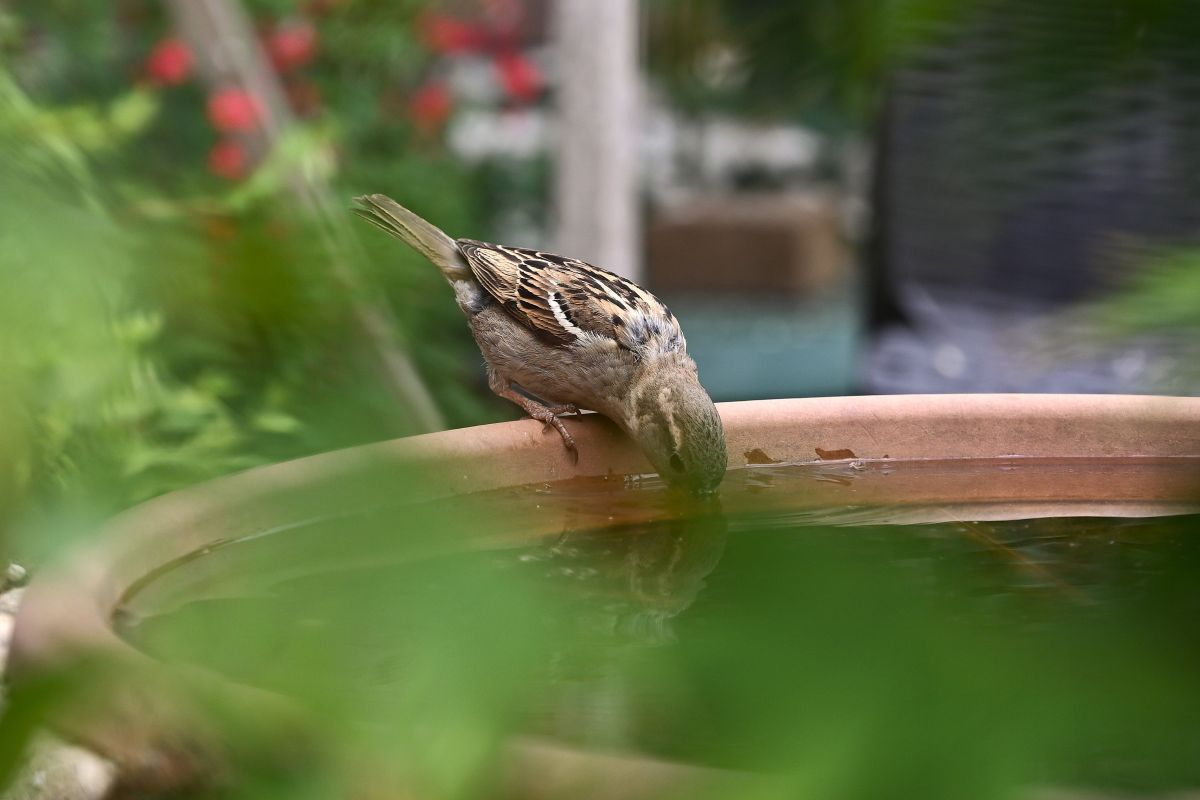
According to Vogelbescherming Nederland (Bird Protection Netherlands), treated dog and cat hairs pose a risk to birds. Pet hairs are popular nesting material for birds such as tits. When animals are treated with flea treatments, pesticides can remain on those hairs. Young birds then come into direct contact with these pesticides when they are in the nest. In research into mortality in young great tits, as many as 26 different pesticides were found. A large proportion of these were found to originate from flea and tick treatments. Because birds do not eat the hairs but sit on them for days, newborn chicks in particular can be extra vulnerable.
What can you do as a pet owner with flea treatments?
This doesn't mean you should let your dog or cat roam around unprotected, of course. Fleas and ticks can be quite unpleasant for animals and for you too! However, we do have tips on how to use flea treatments more consciously. A few simple things can already make a difference:
- Dispose of combed dog or cat hair in with the general waste and not in the garden.
- It's best not to let your dog swim immediately after treatment with flea products, for example, after a spot-on treatment on the neck.
- Use flea treatments only when absolutely necessary.
- Avoid flea collars. Tablets and injections appear to have a lower environmental impact, but this still needs to be investigated. There are also medications on the market with ingredients that are less harmful to nature.
- Consult with your vet about which flea treatments are most suitable for your pet.
A tip from Milieu Centraal: you can often partially prevent a flea infestation without immediately resorting to chemical agents. Check your pet regularly with a flea comb and keep your pet's sleeping and resting places clean. Regular vacuuming, beating out baskets, and washing textiles at 60 degrees can make a big difference. It's also good to ask yourself if preventive treatment is always necessary. In some cases – for example, with an indoor cat that has little contact with other animals – the chance of a flea infestation is relatively small.
And of course, that other point still applies: clean up dog mess properly. Not only for your fellow humans, but also for nature!
You might also find this interesting
- Also see: Help nature and buy pesticide-free plants!
- Also see: Visiting Europe's only fish rescue centre (in Sliedrecht).
- Also see: Help the hedgehog in the garden!
Sources: Radar (episode 15/9/2025), WUR, naturetoday.com, environmental centre.nl, bird protection.nl. Photo credits: Oliver Wagenblatt, Pexels (main image, dachshund), others: thegreenlist.nl (bag), Depth of Raw, Pexels (fleas), Joy Xu, Pexels (cat).