
Summer fruits are delicious, but sometimes you buy a little too much. Before you know it, you have strawberries, berries, or peaches in the fruit bowl that really need to be eaten today. It's a shame to throw them away. Fortunately, there's a simple trick to transform that fruit into something very special: koso. This Japanese fermented syrup is made with nothing more than fruit and sugar. We learned this new cooking skill during a workshop at Diane's from Atelier de Clémentine!
Fermentation: an old technique that's back in vogue
During a workshop on a beautiful summer's day at day café and tea garden Opmaarhuizen doken we samen met Diane van Clémentine's Workshop in the world of fermentation. Diane, together with her mother Marylène, gives workshops on fermentation and special drinks. During this workshop, two recipes were on the programme: koso (we'll get to that shortly) fermented vegetables.
ALSO INTERESTING: Weekend get-away guide to Groningen.
Before we started chopping, stirring, and filling jars, Diane first took us through the story behind fermentation. It's an ancient technique where microorganisms, such as bacteria and yeasts, convert sugars. This causes food to slowly change in taste, smell, and texture. The beauty of it is that this process starts by itself, as these microorganisms are already present on fruit and vegetables, in the air, and in the soil. People have used fermentation for centuries to preserve food longer, but also to develop new flavours. Think of bread, cheese, yoghurt, or sauerkraut. And therefore also koso.
What is koso?
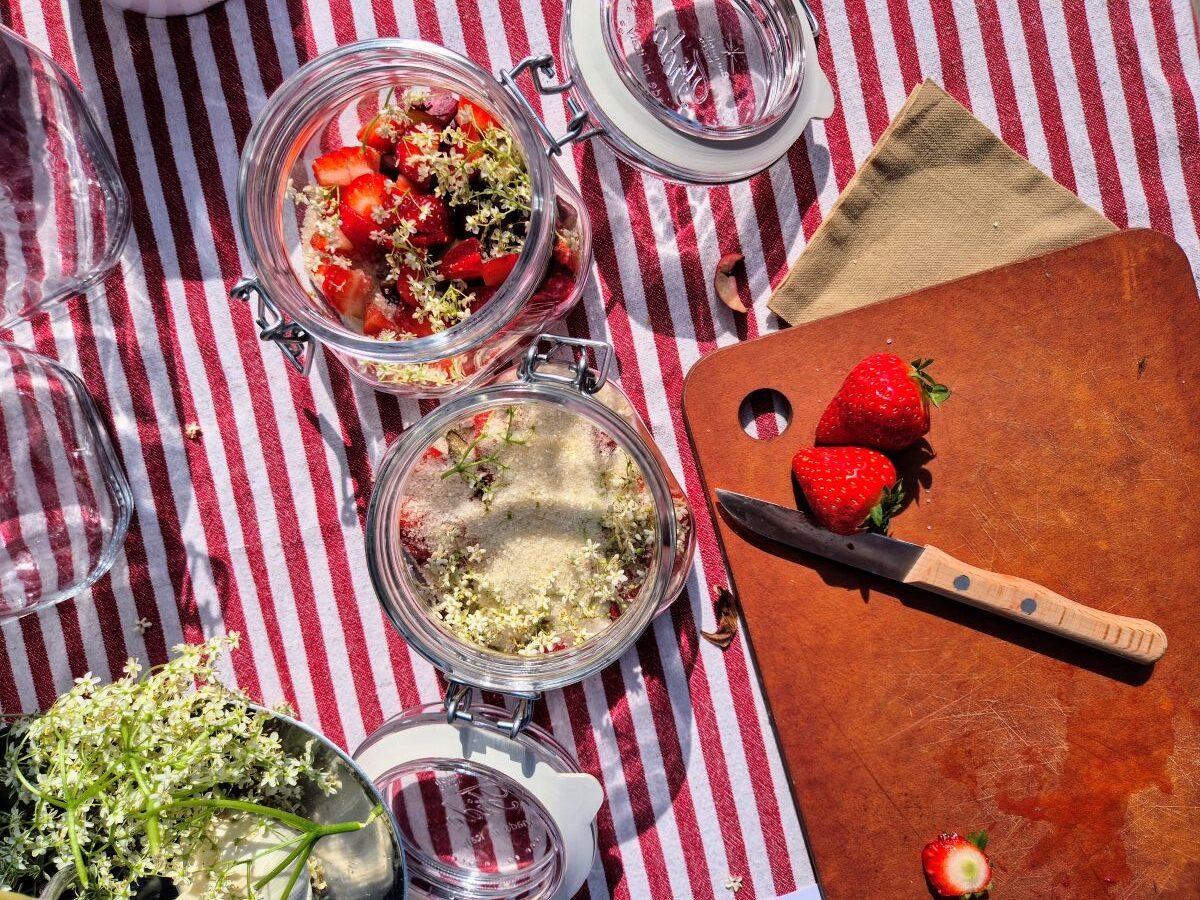
Koso is a fermented raw syrup from Japan made from fruit and sugar. By layering fruit and sugar and letting the mixture stand for a while, fermentation starts naturally. The sugar draws the juice out of the fruit, and the natural micro-organisms do the rest. The result is a fragrant syrup with a fresh, slightly sour taste and a deep fruitiness. Very different from a cooked syrup, where flavours often become a little flatter. With koso, the opposite happens: the flavours become more intense and complex.
And perhaps the most enjoyable part: koso is a perfect way to save summer fruit. A punnet of strawberries that's becoming too soft, a few overripe peaches, or a handful of berries neglected at the back of the fridge: it can all go in the jar. This way, you can turn fruit that might otherwise go to waste into something new and surprisingly delicious.


Making your own syrup might sound complicated, but with summer fruits and a bit of patience, you can create a delicious Japanese fermented syrup.
Making Koso: fermented syrup from 'saved' summer fruit.
Kitchenware
- glass jar with rubber lid
- Chopping board with knife
Ingredients
- Organic white sugar
- Juicy fruit of your choice No banana
- Optional: flavourings such as rose elderflower, thyme, cinnamon or cloves
Instructions
- Make layers of white sugar and fruit in the jar, alternating. Begin and end with a layer of sugar.
- Put the pot in a warm place, for example on the windowsill.
- Stir the koso every day until all the sugar has dissolved.
- Let the mixture ferment for about two weeks. Open the jar occasionally to allow the gas to escape, and then taste it straight away.
- Are you happy with the taste? Strain the syrup and store it in the fridge.
- Use the syrup in sparkling water, tea or yoghurt. It also works well as a base for a summery mocktail or cocktail, for example with rosé or prosecco.
- The leftover candied fruits don't need to be thrown away, by the way. They are delicious in compote, as a sauce over a dessert, or as a flavouring in tea.
You might also find this interesting!
- Also see: On wild-picking walk in Amsterdam.
- Also see: Recipe for elderflower cordial.
- Also see: Chutney from unripe green tomatoes.
Photo credits: thegreenlist.nl.