
Fermenting vegetables might sound complicated, but it's actually one of the easiest ways to preserve vegetables for longer. Do you have half a cauliflower, some radishes, or a couple of beetroot left over? There's a good chance they'll end up lying forgotten in the vegetable drawer. What a waste, because with a jar, water, and some salt, you can turn them into something very special: fermented vegetables. We learned this new cooking skill during a workshop at Diane's from Atelier de Clémentine!
Fermentation: an old technique that's back in vogue
During a workshop on a beautiful summer's day at day café and tea garden Opmaarhuizen doken we samen met Diane van Clémentine's Workshop in the world of fermentation. Diane, along with her mother Marylène, runs workshops on fermentation and special drinks. During this workshop, two recipes were on the agenda: koso (a fermented fruit syrup) and these fermented vegetables.
ALSO INTERESTING: Weekend get-away guide to Groningen.
Before we started chopping, stirring, and filling jars, Diane first took us through the story behind fermentation. It's an ancient technique in which micro-organisms, such as bacteria and yeasts, convert sugars. This slowly changes the taste, smell, and texture of food. The beauty of it is that this process starts by itself, as these micro-organisms are already present on fruits and vegetables, in the air, and in the soil. People have used fermentation for centuries to preserve food for longer, but also to develop new flavours. Think of bread, cheese, yoghurt, or sauerkraut.
Why fermenting vegetables is so fun (and tasty)
Fermented vegetables develop a fresh, slightly sour taste and often remain deliciously crunchy. It's also a convenient way to preserve vegetables without cooking or freezing them. With just water and salt, the fermentation process starts on its own. During fermentation, lactic acid bacteria make the environment in the jar acidic. This prevents harmful bacteria from growing, keeping the vegetables fresh for longer. At the same time, new flavours develop that you wouldn't get with ordinary preparation. Fresh, a little sour, and sometimes even a tiny bit effervescent.


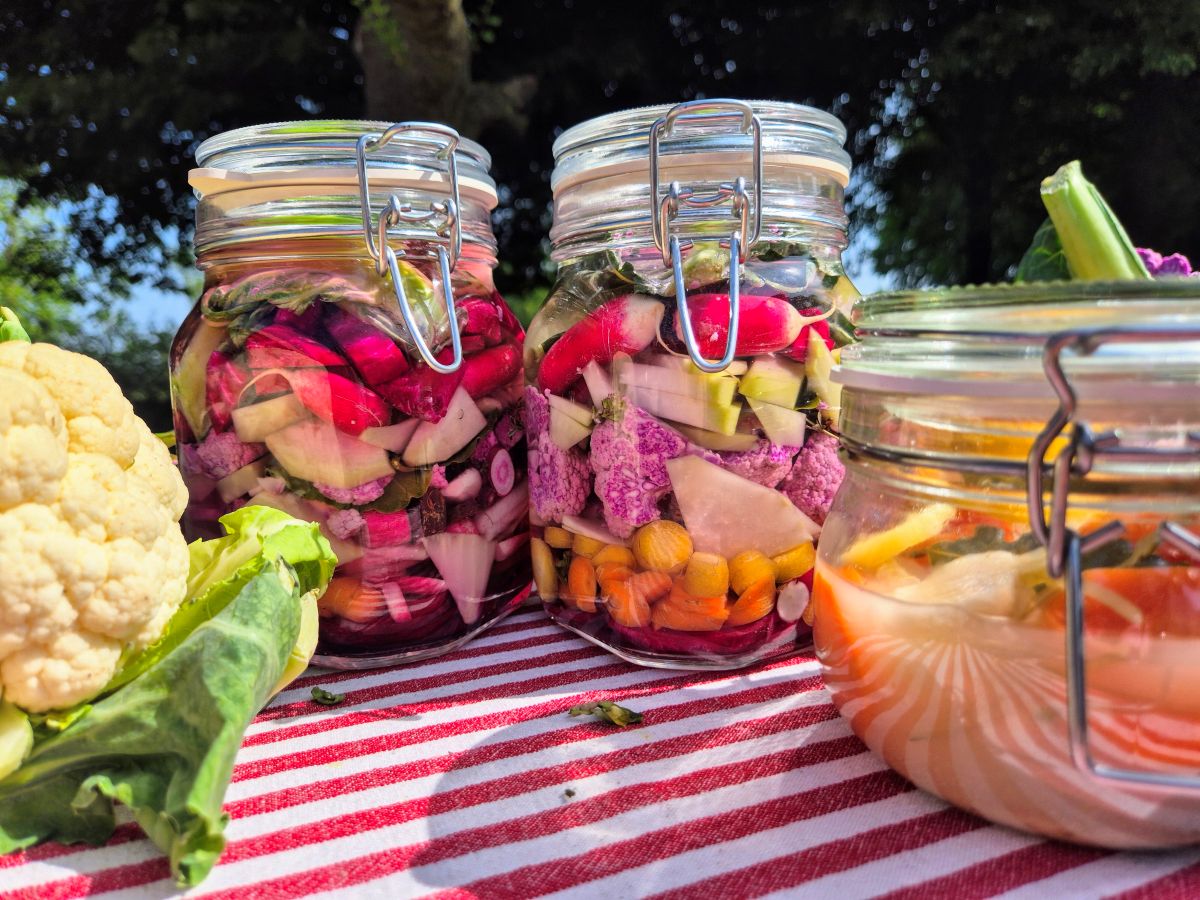
Almost all hard vegetables ferment very well. With this recipe, after two weeks you will have delicious, slightly sour vegetables for on bread or with dishes.
Making fermented vegetables: what you need
Kitchenware
- Glass preserving jar
- Chopping board with knife
Ingredients
- organic seasonal vegetables of your choice (many hardy vegetables are suitable for fermentation. Think, for example, of beetroot Kohlrabi, broccoli, asparagus, turnips
- radishes
- 2 cloves of garlic
- 1 Bay leaf
- spices of your choice such as rosemary, thyme, coriander seed or extra bay leaf
- for the brine:
- 1 litres water
- 20 g Wadden Sea salt
Instructions
- Cut the vegetables into pieces.
- Make a brine solution with a ratio of 20:14:1: dissolve 20 grams of sea salt in 1 litre of water.
- Put the vegetables in the pot with the garlic, bay leaf and any spices.
- Pour the brine over it until everything is completely submerged.
- Press the vegetables down firmly so they are not sticking out of the water.
- Leave the pot at room temperature for 2 to 3 days.
- You notice that fermentation is starting when you see bubbles or smell a slightly sour odour.
- Let the vegetables ferment for about two weeks. Open the jar occasionally to release gas and taste in between.
- Are you happy with the flavour? If so, put the pot in the fridge.
You might also find this interesting!
- Also see: On wild-picking walk in Amsterdam.
- Also see: Recipe for elderflower cordial.
- Also see: Chutney from unripe green tomatoes.
Photo credits: thegreenlist.nl.