As soon as the sea buckthorn bushes are laden with bright orange berries at the end of summer, it's time to head outside for one of the season's most delicious wild-picked treats. Sea buckthorn doesn't just grow in the dunes, but also pops up in pick-your-own farms and edible gardens all over the Netherlands. And those berries? They're fresh, tart, and mega flavourful, perfect for making into a syrup: lovely in yoghurt, with sparkling water, or as an autumnal kick in your tea. Wild-picking expert Katja Wezel from wilderlust.nl Show us how you make it!
Recognising sea buckthorn
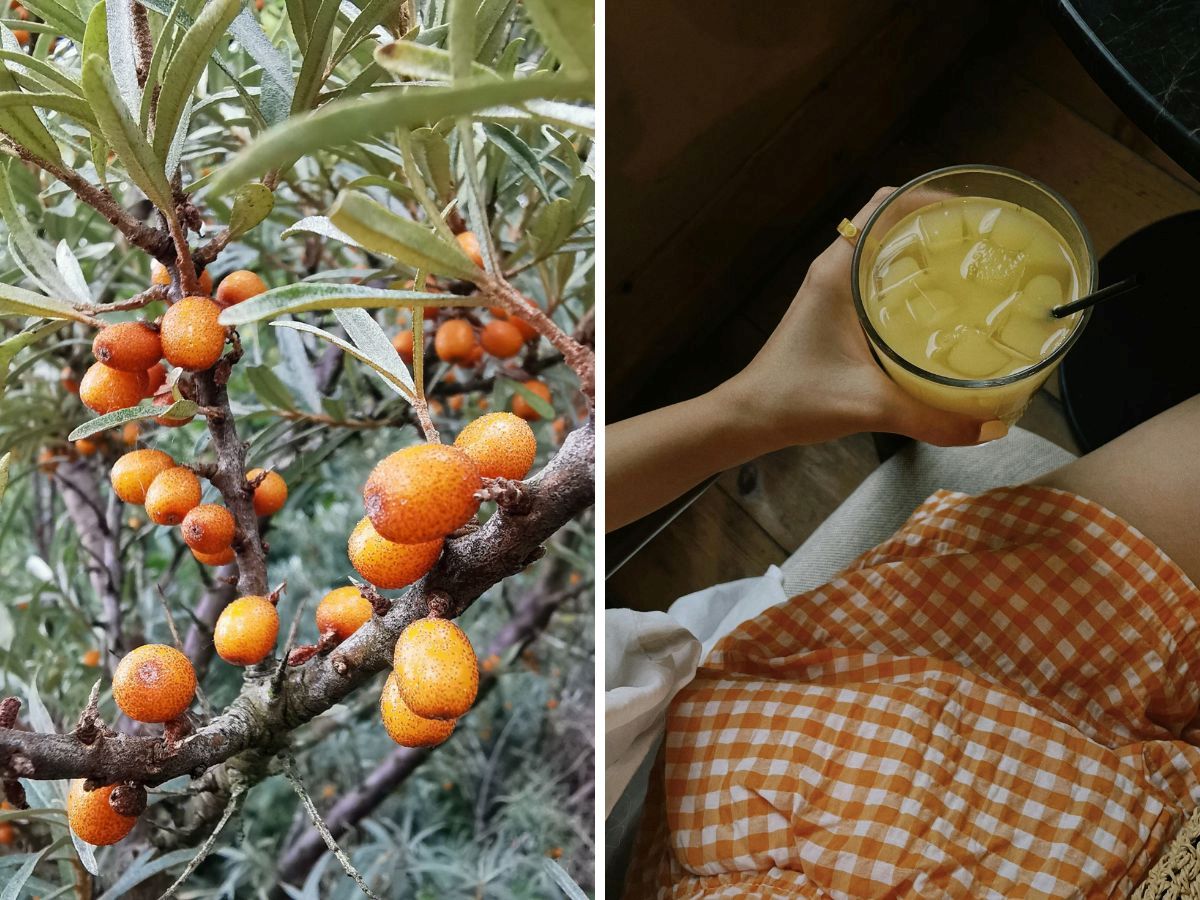
Sea buckthorn grows abundantly along the Dutch coast and feels most at home in open, sunny spots in the dunes, on nutrient-rich, calcareous soil. You can recognise the shrub by its thorny branches, grey-green leaves with a silvery underside, and of course, those bright orange berries that are almost stuck to the branches. The taste? Freshly sour with a bitter note. A real wow moment when you taste one, but precisely because of this, it's perfect for making into syrup, jam, or jelly. And fun to know: sea buckthorn is dioecious, which means there are male and female shrubs. The males ensure pollination in the spring, and the females are the ones that produce those delicious bright orange berries at the end of summer, just like humans.
Sea buckthorn picking
Are you going to pick sea buckthorn yourself? Make it easier for yourself and look for branches that are really bursting with berries, because processing sea buckthorn is a job in itself. Cut off pieces of about 20 to 30 centimetres with secateurs and put those branches in the freezer for a few days. Then you can get the frozen berries off much more easily: with your hands, or even faster by tapping them off the branches with a spoon. Some people even hit the frozen branches into a bin or (if you have space at home) into the bathtub, so that the berries come loose. And yes: watch out for the thorns. A pair of gardening gloves is by no means a luxury here.
Sea buckthorn = superfood
Sea buckthorn berries are known as a real vitamin C bomb: they even contain significantly more vitamin C than oranges. In addition, they are also packed with other beneficial substances for your body, such as vitamins A, B, E, F, and K, as well as minerals like calcium and magnesium. Also noteworthy: sea buckthorn contains various fatty acids, including omega-7 and omega 3, 6, and 9, which are mainly found in the seeds of the berry.
Sea buckthorn syrup making
Kitchenware
- blender
- pan
- spoon
- fine sieve or cheesecloth
- Clean bottle or jar for storage
Ingredients
- 500 g Sea buckthorn berries taken off the twigs
- 500 g sugar
- a little water
Instructions
- Pick sea buckthorn according to the instructions in the article.
- Put the sea buckthorn berries in a blender with a little water. Blend everything into a juice, and continue blending until the berries and pips are as fine as possible.
- Do you want a smooth syrup without lumps? Then strain the mixture through a cheesecloth or a fine sieve. You can also leave (some of) the lumps in yourself, as the seeds contain fatty acids.
- Put the juice in a pan and add the sugar. Bring the mixture to the boil. Let this simmer for a while, stirring regularly in the pan. Do not leave the pan unattended on the heat.
- The syrup will thicken as it boils. When you are happy with the consistency of the substance, you can remove the pan from the heat and let it cool. The syrup will also thicken a little more as it cools.
- Pour the syrup into a clean (!) bottle or jar and preferably store in the refrigerator. To thoroughly clean glass jars and bottles? First pour boiling water over them (don't forget the lid) and then place the jar/bottle in an oven at 100°C for ten minutes.
- The syrup can be kept for six months to a year. Perfect for getting through the winter. Enjoy and happy eating!
Neat game picking
Foraging and creating your own recipes is great fun, but don't forget: foraging is officially forbidden in the Netherlands and is often only tolerated. In some places, stricter rules apply or it is strictly prohibited. And certain species are also forbidden to pick. Therefore, always forage with respect for nature: only for your own use, never take more than you need, and leave enough for animals, the shrub itself, and other nature lovers. Want to know more about what to look out for? Here is a handy overview of the game picking rules.
Would you also like to go on the road with Katja? Check out her website wilderlust.nl with all the information about its wild-picking walks and courses.
You might also find this interesting
- Also see: candied green figs.
- Also see: green tomato chutney.
Photo credits: left: Wilderlust (sea buckthorn), right: Buse Çolak, Pexels (lemonade).