
Do you often feel hot in summer? Well, you are not the only one who suffers. Animals, such as insects and amphibians, as well as plants in our backyard, have a tough time in summer. And it is only getting worse, because the climate is changing. Animals crave more water in summer. Spraying more to help them? That's not really a sustainable solution either, being sparing with water is the advice anyway. So how can you deal with drought in the garden in a sustainable way and give the animals a little relief?
Drought in the garden
Every year, we water our garden with an average of about 11 hundred litres of drinking water, which is equivalent to 27 five-minute showers. Pooh, that's quite a lot. Especially when you consider that clean drinking water is scarce. Indoors, you can reduce your water consumption by bathing less or not at all, taking shorter showers or using the eco mode or a water-saving shower head in the shower. Saving water - in a garden that yearns for water in summer - is still quite a challenge. But you can also save quite a few litres of drinking water in your garden, while continuing to take good care of animals and plants. Any tips? Here they come!
Fewer tiles in the garden ensure cooling
Those tiles of ‘your low-maintenance’ garden attract huge amounts of water. At thegreenlist.nl we are not really into those tiled gardens. Not good for biodiversity and above all: not cosy and not green. But now there is an additional reason: too hot. So saving water starts with the (new) design of your garden. Go for as much greenery and as few stones as possible. If you have less paving and thus more greenery in your garden, rainwater can be absorbed better. In addition, plants have a cooling effect. Did you know that in tiled gardens it gets up to 7°C warmer than gardens with plants? That's what I mean. Get to work: get rid of those tiles! Milieu Centraal has handy tips for green garden design.
Adapt planting to drought
Going to the garden centre on the spur of the moment for some nice garden plants is not a good idea. Make a plan and choose plants that suit your garden? What suits your garden depends on the soil you have (clay, sand, peat, loess or something else) and how the sun falls on your garden. Some plants are suitable for sunny gardens, while others thrive better in shade or semi-shade. Make sure you choose plants that suit your garden, get good advice if you find that difficult. Tip: Look for native plants or ask your garden helper to make a plan with as many native plants as possible. This is good for biodiversity. Our animals and insects are more suited to the plants that originally grow here. They go happier on those than on an exotic. Want to know more about native plants: then check out this article about it.
Furthermore, it is incredibly important to choose organic - and therefore GIF-free - plants. Why seems obvious - GIF, but here too we have written an extensive article about it.
Reduce evaporation with more plants
It is an open door that plants are important for animals and insects: plants provide food and shelter. They also nicely keep unwanted plants (weeds) in check. But planting is also important to reduce evaporation. Did you already know that? Soil without plants evaporates 50% more moisture than soil with plants. Put simply, plants make the top centimetres of the soil dry out less because they provide shade on the soil. On the other hand, soil-covering plants also need moisture, which they absorb with their roots and evaporate through their leaves. As a result, they provide cooling. You notice the difference immediately: just walk with your bare feet on tiles and then on plants. Plants contribute to biodiversity and ensure that rainwater infiltrates the soil better with their roots.
Reduce evaporation with a mulch layer
Mulching is covering the soil with an organic material such as straw, hay, wood chips, leaves and cut grass. A mulch layer inhibits air circulation and therefore evaporation. You can also spread freshly cut grass in your borders or cut or chopped wood. You cover the exposed soil between your plants with these different materials. This protects against cold and gives nutrition to the soil and plants. It stops weeds and you recycle your garden waste. So it has super many benefits. And now with the high temperatures and barely any rainfall, a good mulch layer keeps your soil moist and you hardly need to water. If you find this too inconvenient or unattractive, a generous layer of wood chips or durable peach seeds is a good alternative. There is much more to tell about mulching, see article here: mulching for beginners.
Also nice to know is that in hollow plant stems - which you leave when mulching - small insects or their eggs can hibernate. This way, you ensure that ladybirds are already on site in spring to fight the aphids. So leave it all out there!
Storing water
In drought conditions, taps are soon turned on. Own water storage can limit the amount of tap water going into the garden. You can a rain barrel for your birthday or even go a step further and store rainwater by disconnecting your downspouts a connecting it to a rain barrel or larger vessel. Also check with your municipality, as you may be able to find out here grant get for it.
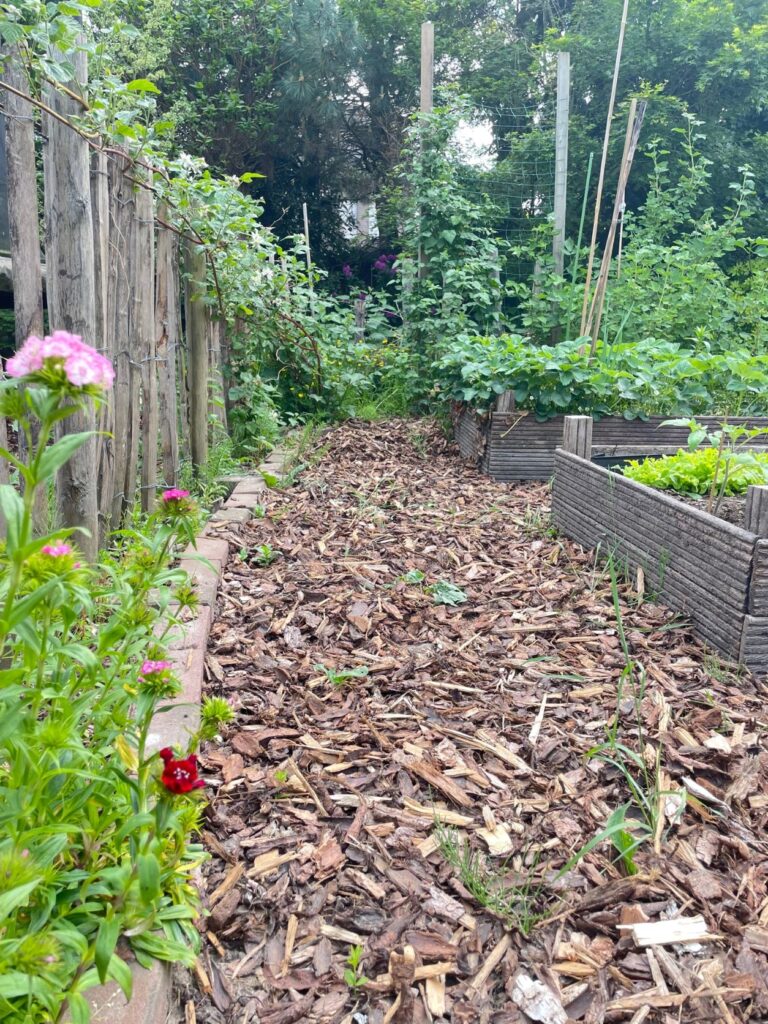
A mulch layer is organic material that keeps the soil moister in times of drought.
Watering
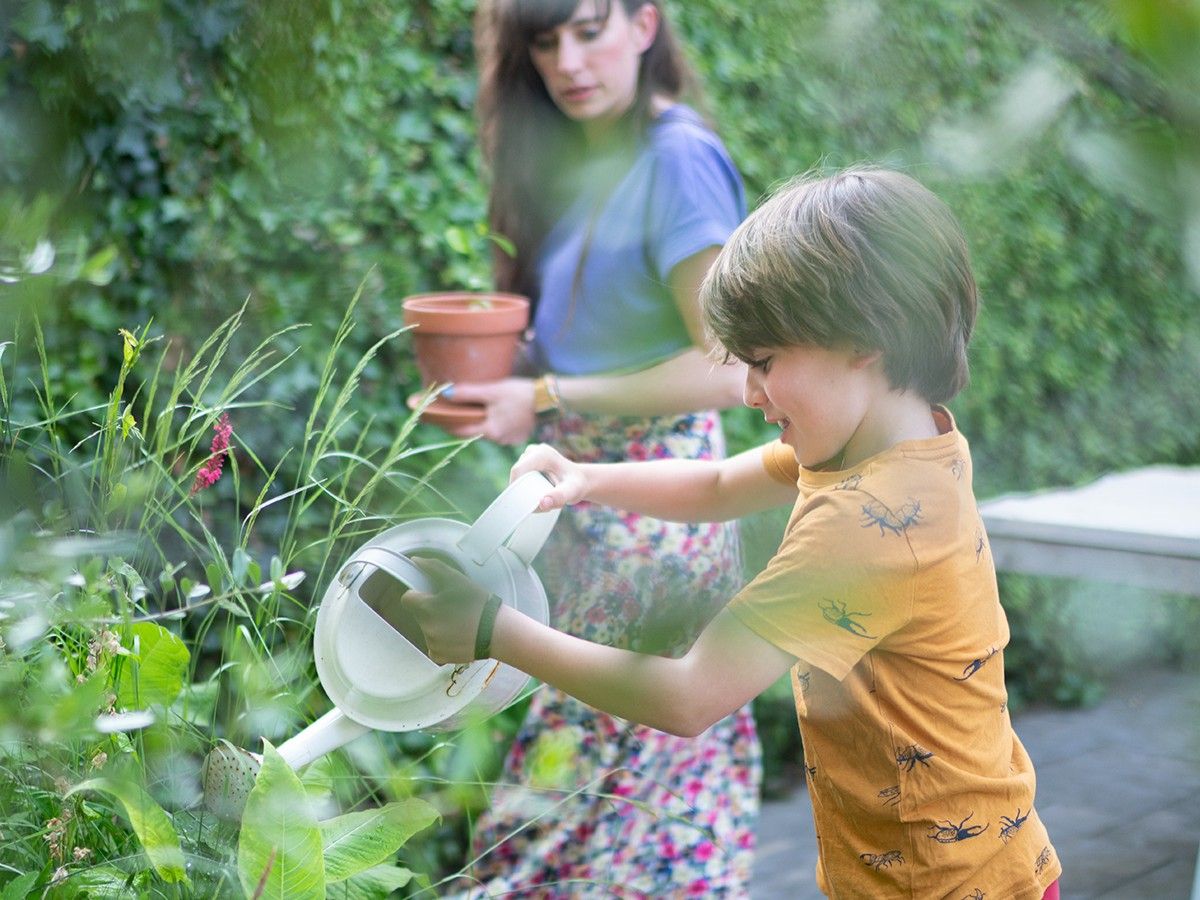
If you provide a variety of plants in the right place (so no shade plants in the sun), the soil is loose and covered with a good mulch layer, you probably won't need to add much water. So the basis is to take good care of the soil. If you want to test whether your plants need water, dig a hole five to ten centimetres deep. If it is still moist there, you don't need to water. Another option is: watch your plants! If they hang limply in the morning, then it's time to water. If they hang limply in the evening, that's not a bad thing; they often recover overnight.
Best time to water garden plants
If you do need to water the garden, the best time to do it is in the morning. In the middle of the day, the heat causes too much evaporation and that is a waste of water. Too late in the evening is not preferable either, because the plants then go into the night wet and this increases the risk of mould and it can attract snails. It is best to spray on a cloudy morning with little to no wind. Furthermore, the advice is to water well once a week rather than briefly every other day. If you spray often, the plants become ‘lazy’. The roots remain too much at the surface, because that is where the water always comes. When a dry period then arrives, the plants dry out much sooner, because they are used to a lot of water.
Water tips and additional warning
Do not leave your garden hose full in the sun (especially in summer) to prevent legionella. Accidents also happen regularly with garden hoses in the sun. The water in the hose gets so hot that it can cause burns, especially for small children too! You can collect the cold water, before the shower gets hot, in a bucket and use it to water plants.
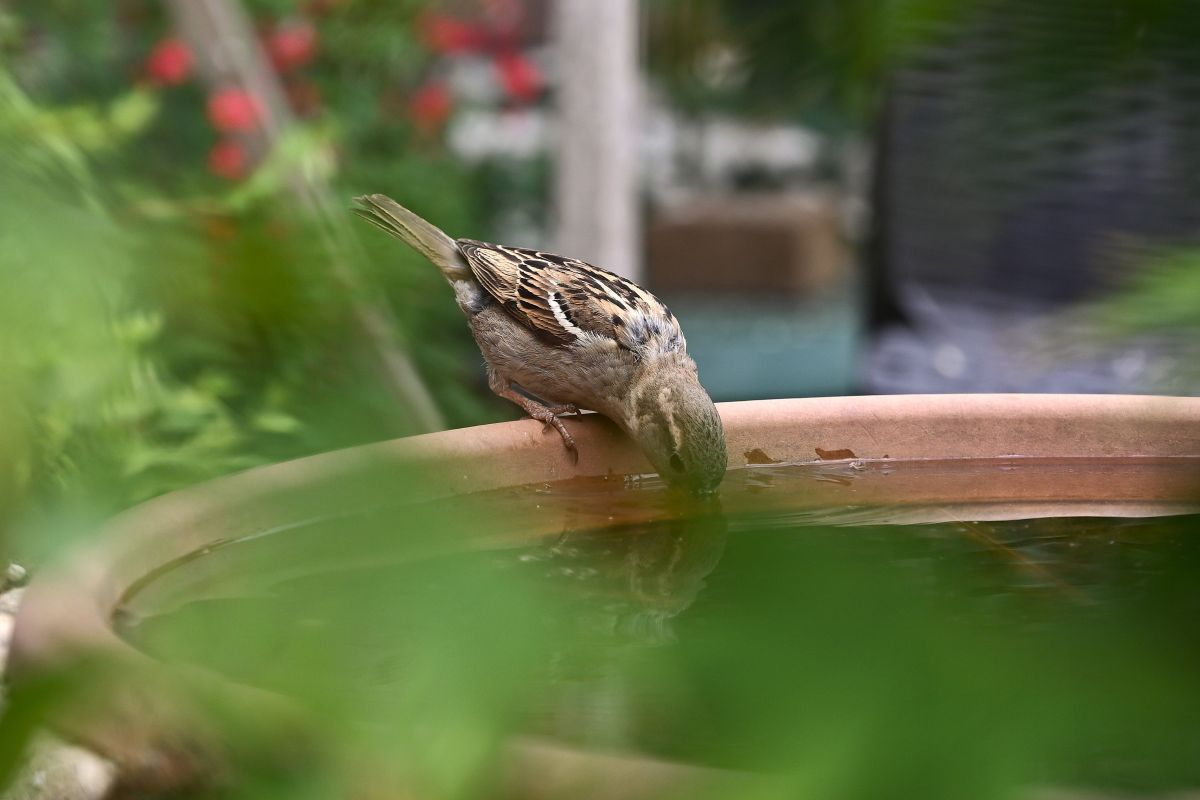
Besides plants, animals also need water. For this, also check out this article: This is how you provide more water in the garden for animals.
Grass and drought
Finally, there is one type of green that is much more drought-prone than all the others: the lawn. Grass is just one type of plant, all seeking to absorb moisture from the same top soil layer. Did you know that grass roots grow as deep as the grass is tall? If you let the grass grow a little higher, the roots will also go deeper into the soil, making the grass more resistant to drought. Grass can take a beating and actually gets stronger with less watering. A lawn is actually a boring plant if you ask me, and hardly adds any value. Often, all kinds of interventions are needed to keep the lawn in good condition, such as scarifying, fertilising and adding lime. And ohwee if the grass is greener next door, so there is heavy watering and weeding. Where does this obsession come from anyway? My advice: relax and unwind and go for an herb-rich grassland. Cozy up with all kinds of flowers and stop worrying about weeds.
More sustainable tips from thegreenlist.nl
- What? Organic potting soil and garden soil don't exist!
- Blue-green algae How does it arise and what should you do if you suddenly swim in it?
- Cleaning garden chairs: This is how to clean garden furniture in an eco-friendly way.
- A cool house without air conditioning: take a quick look at the tips.
Sources: natuurpunt.be, Milieu Centraal, Climate adaptation Netherlands, Climate adaptation Netherlands, book: Long live the soil! A healthy foundation for every garden, podcast #27 from Gardening Quarterly. Photo credits: Angela de Vlaming (main image), other: Amanda Sniekers.