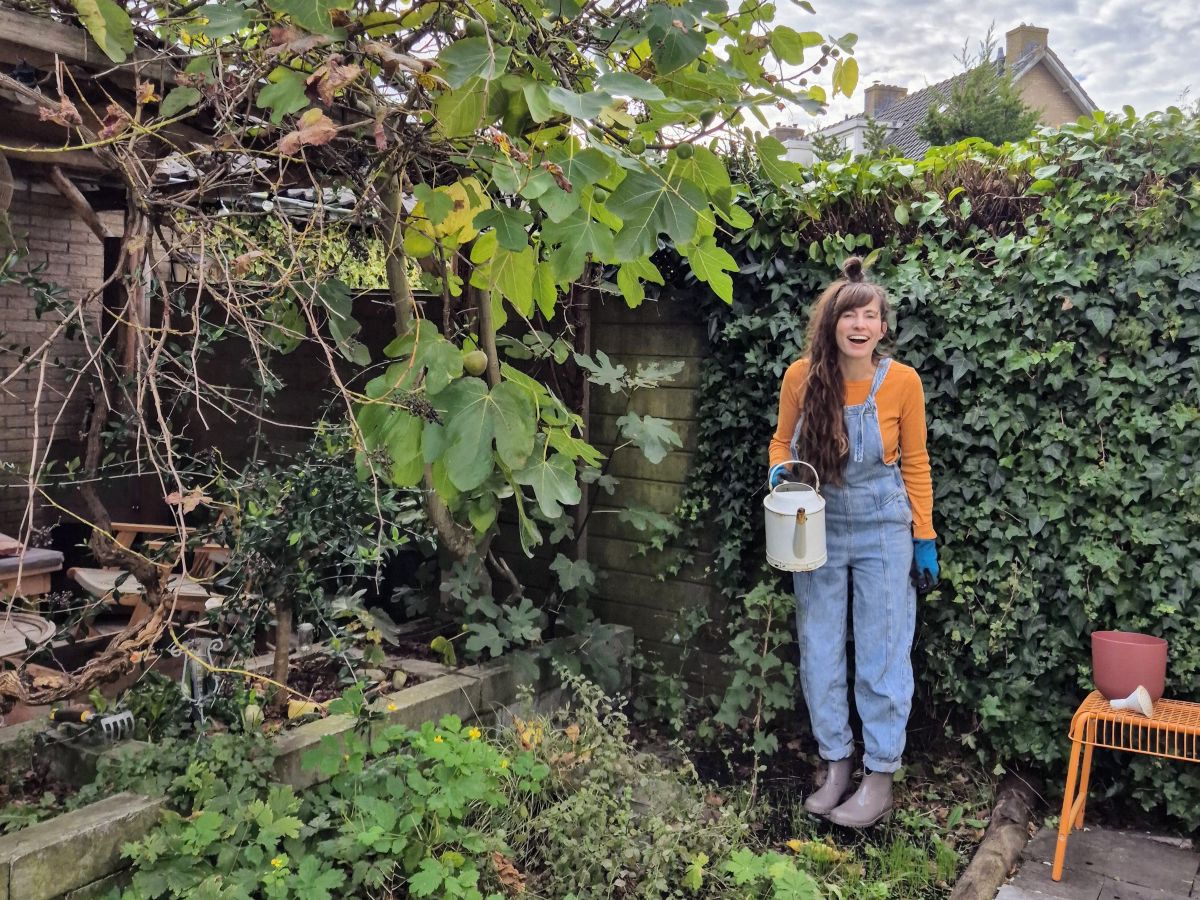

With beautiful garden plants, you bring a piece of nature into your garden. At least that's what you think, right? Not for nothing there is a massive call to flip tiles and make way for flowers and plants that bees, butterflies and other insects can live on. And yet, there is also a lot wrong with garden plants and bulbs that we buy en masse with good intentions. What is going on and what should you buy to garden in an environmentally and animal-friendly way? And what about poison and poison-free garden plants?
Sustainable gardening with toxic-free garden plants
Delightful with your hands in the earth and surrounded by all the beautiful greenery you have planted. Gardening seems like a very sustainable and healthy hobby. Well, that turns out to be a bitter disappointment. Because growing garden plants turns out to be very wrong. Poisons on plants and bulbs to prevent insect infestations and the use of artificial fertiliser do little good to insects and the soil. And it is not a small-scale problem; those harmful plants are sold en masse in garden centres. And you think you're being nice and green with all those garden plants. What about this and what should you pay attention to? Because that green garden has to be really green.
Poison-free garden plants, are there any poisons on plants?
Many garden plants have poison on them. Chemicals and pesticides, which are meant to be toxic, are used in the cultivation of regular garden plants. They are used to control weeds, fungi, insects or animals such as mice during cultivation. And although numerous studies point to the harmful effects of pesticides on health and biodiversity, these plants are still for sale in large numbers. Garden centres are full of them! Of course, if those pesticides kill animals during cultivation, the exact same thing happens once that plant is in your garden. That poison really isn't gone by then. Tests also show that traces of poison are found even after years. And who suffers the most? Our pollinators. Ai, and they are already doing so badly. Bee-friendly plants then?


Garden with as many organic plants as possible, as they are not sprayed with pesticides.
Bee-friendly plants often misleading
If you see a text ‘bee-friendly’ or a picture of a happy bee on a plant you come across in the garden shop, beware. Probably you are about to get into greenwashing trapping. Those plants are not friendly to bees at all. They have been sprayed with poison. And the worst thing is: those bees don't realise it. So when you buy that plant and put it in your garden with your good green intentions, those bees quietly buzz towards that plant for their nectar. And before they know it, they are poisoned by the residues of pesticides still on that plant. Texts like ‘poison-free’, ‘bee-friendly’ or ‘good for the bees’ are often misleading. So with those plants, they try to trap not only bees but also you.
Greenpeace had 69 samples of flowering ornamental plants tested for some 400 pesticides. The results can safely be called shocking: only one sample contained no toxins. On all other samples, they found harmful pesticides, even agents that are banned. That is a bad thing in any case, but it is even worse because the world's biodiversity is in such a bad state. And it is precisely those bees and bumblebees that we desperately need to preserve biodiversity, because they pollinate 71% of the most important agricultural crops. Without bees, we have no food either.
Want to know more about our bees and harmful poisons on garden plants. The TV programme Keuringsdienst van Waarde made a fascinating episode about it.
Poison on flower bulbs too
Not buying plants, but flower bulbs? That's a very logical thought, but the same thing is going on with flower bulbs. Common bulb cultivation is one of the most polluting forms of agriculture. The pesticides used here also pollute the air, soil and (drinking) water, and the poison is harmful, even to humans. This has even been researched! In the Netherlands, flower bulbs are grown on some 27 thousand hectares of land. Research by the government (RIVM) into pesticides around bulb fields, shows that pesticide residues can be found in abundance in the homes of local residents. In addition, they have been found in the urine of residents living near flower bulb fields, both in adults and in children and babies. This is also the case in people living more than five hundred metres away from agricultural fields. Want to know more about poisons in flower bulbs? We have devoted a separate article to this.
Fertiliser dossier
There is also a lot going on with fertilisers and you can't separate it completely from pesticides. Fertiliser is used in regular cultivation to make plants grow faster. A great remedy, but it also weakens the plant, weakening its roots and making it more susceptible to diseases and pests. Many gardens still use artificial fertiliser. And it is better not to do that. You may not realise it, but fertilisers contain a lot of salts. And salt destroys soil life. And it is precisely that soil life that needs to remain strong and healthy, because it protects your plants against disease and pests. So when you destroy soil life by using fertilisers, you need pesticides again to fight diseases and pests. Also, the plant needs fertiliser again and again to look a bit flourishing. And so you end up in a vicious circle.
Soil life, what is it anyway?
Healthy soil is soil with lots of life. The more life under the ground, the busier life is above the ground too. There will be lots of birds, insects and other cosy flying and crawling traffic. An awful lot happens in soil. Bacteria, fungi, protozoa, nematodes, worms, snails, arthropods and vertebrates live there and this in turn attracts all sorts of things above ground. Besides digesting organic material and exchanging nutrients, soil-dwelling animals also provide oxygen to the soil by creating pathways. These passageways also allow water to sink into the soil better. In short, soil life is a super important part of keeping our ecosystem in balance. It is a miracle, which we should not start poisoning.
Organic versus non-organic plants
To keep soil life and insects healthy, it is important to forgo fertiliser and poison-free plants. So what do you buy? Organic plants! Organic means that the above-mentioned chemical or artificial pesticides have deliberately not been used in cultivation, nor has artificial fertiliser been used. Regular plants and bulbs do use these means. In most garden centres, unfortunately, you still don't find many organic plants, flowers and bulbs. You often have to look hard and what also doesn't help is that organic plants often look a bit less beautiful (and at the same time a bit more expensive, because organic is not mass-produced). So people are less keen to buy it. You should therefore know that regular plants look so pretty because it takes a lot of art and craft to get them that way. An organic plant often needs a bit more time to bloom into a beautiful picture later in your garden.
Buy organic, non-toxic plants, seeds and bulbs at organic growers.
This is how you get a poison-free garden!
Those organic garden plants and bulbs may have caught your eye now, but there is more you can do to make your garden a green paradise.
- Buy native plants as much as possible. Our insects and animals thrive better on plants native to the Netherlands. It's a natural match. There is also much more to tell about this, we have devoted an article to it.
- Mill and hoe as little as possible.
- Provide plenty of organic material (compost, mulching).
- Choose plants that suit your soil (sand, clay, peat). Get advice from an expert.
- Use green manures. These are plants that grow quickly, make a lot of leaves and contain a lot of nutrition. You cut these plants small and so this gives nutrition to the soil (chop & drop).
- Provide diversity of plants. Each plant stores different nutrients.
- Do not use fertiliser.
- Use peat-free potting soil, as most potting soil contains peat, which is disastrous for the climate and soil. Read for yourself!
More green tips from thegreenlist.nl
- Also see: butterfly man Nicky shares tips on how to take good care of butterflies.
- Also see: This way, you provide more water in the garden and help animals.
- Also see: Dealing with drought in the garden.
Sources: environment.nl, environment.nl, PAN Netherlands, RIVM. Photo credits: thegreenlist.nl.