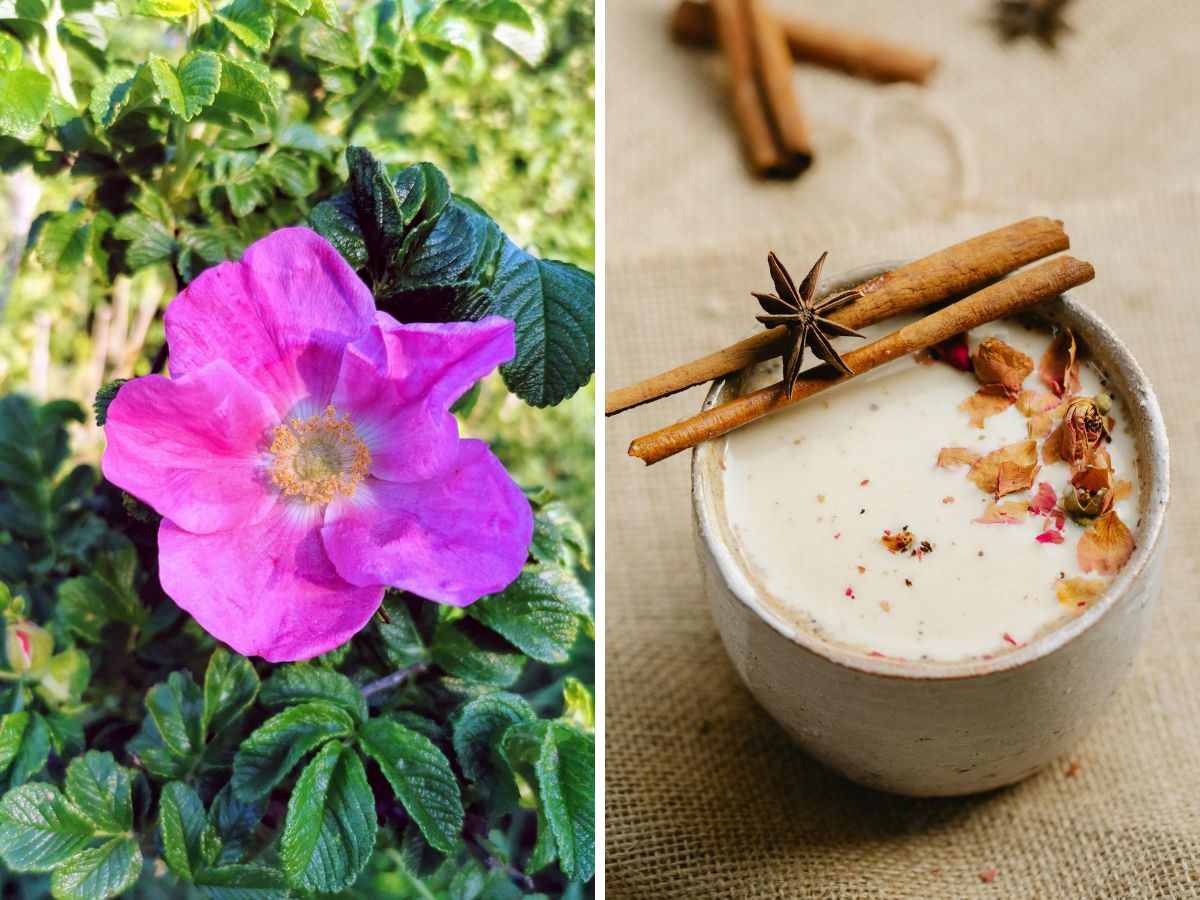
Roses aren't just beautiful to look at, you can also make surprisingly tasty drinks with them. This rose cappuccino is soft and floral and perfect for a quiet moment: in the summer with fresh rose petals or later in the year with dried ones. Wild foraging expert Katja Wezel from wilderlust.nl Show how to make this special wild food recipe, using only roses that you can find growing wild in the Netherlands.
Looking for edible roses
Roses have been loved for centuries for their scent and flavour, and for good reason. The petals of all wild roses are edible and taste just as they smell: gently floral, sometimes with a slight sweetness. In the Netherlands, you're most likely to encounter the dog rose, rugosa rose, and sweet briar. You'll find them in dunes, parks, gardens, and along roads, where they bloom from May to July. For recipes, always use unsprayed roses. It’s best to avoid roses from bouquets or garden centres, as they are often full of pesticides. Read more about the environmental impact of flowers here.
Not every rose is equally suitable for the kitchen. It's not about the size or colour of the flower, but the scent. If you detect little smell, you'll often find that reflected in the taste. Strongly scented roses provide the most flavour. Only pluck the petals, and leave the rest of the flower on. This way, the rosehips – the fruits of the rose – can still ripen later in the season. These hips are striking in shape and colour, from orange and red to almost black, and are packed with vitamin C. The hips of the rugosa rose are particularly popular for making jam, jelly, or syrup.
You can recognise the different roses by their leaves and thorns, among other things. The dog rose has oval, coarsely toothed leaves and curved thorns, the rugosa rose is recognizable by its wrinkled leaves and sturdy, straight thorns, and the eglantine – a nice detail – smells a bit like apples with its leaves. Whichever species you encounter: pick with care. Some roses are rare and it's best not to pick them, such as the dune rose with its dark hips. Always pick with respect for nature, take only what you need and leave enough to enjoy now and later in the season. You can read more about the wild foraging rules here.
Rose drink: rose-elderflower-cappuccino
Kitchenware
- small pan
- sieve
- 2 cups
- Milk frother or whisk
Ingredients
- 250 ml water
- 1 el grated fresh ginger
- seeds from 2 cardamom pods
- 2 el rose petals dried yeast
- 300 ml plant-based milk of your choice
- 2 el elderflower or elderberry syrup Make it yourself? You can find the recipe for elderflower cordial here.
- pinch of ground cinnamon
- 1 fluorescent Rose water optional
Instructions
- Put the water, ginger, cardamom and rose petals into a small saucepan. Keep one rose petal aside for garnish.
- Bring the whole lot to the boil with the lid on the pan and then let it simmer gently for about 5 minutes.
- Pour the hot mixture through a sieve and divide it into two cups. Press out any remaining solids in the sieve.
- Add ½ tsp rose water to each serving if desired.
- Warm the plant-based milk and froth it. Divide the milk foam between the cups.
- Add 1 tbsp elderflower or elderberry syrup per portion and stir.
- Sprinkle with a pinch of cinnamon and garnish with half a rose petal.
You might also find this interesting
- Also see: Wild food foraging walk with Katja.
- Also see: Make dandelion syrup yourself.
- Also see: Nettle tempura.
Photo credits: links: Wilderlust (roos), Charlotte May, Pexels (drankje).